
Tosa West students stepped up to save lives on November 7, 2025, as about 40 donors and 20 volunteers came together for the annual Fall Blood Drive.
The school-wide effort, which successfully collected blood that will impact over 108 local patients, was primarily organized by the Health Occupation Students of America (HOSA) club. HOSA partners with Versiti, a non-profit blood center, to provide life-saving donations for people in need and to give students hands-on experience in healthcare careers.
For many students, it was their first time donating blood, and while the experience can be overwhelming, it is a positive way to give back.
“I donated blood to help others. This was my first time donating, and I was scared at first, but it didn’t hurt,” said senior Devin Townsend. “I would come back to donate again and I would totally suggest people to donate blood.”
The successful drive included 40 registered donors, resulting in 31 Successful Whole Blood collections and 3 donors completing the more specialized Double Red collection.
The Donation Process
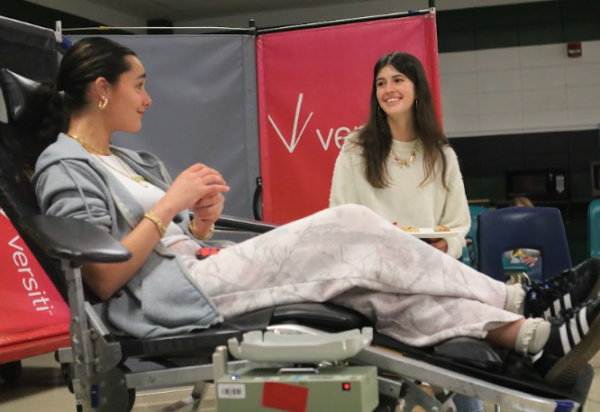 After entering the Trojan room, where the blood drive took place, donors were greeted by HOSA volunteers who handled check-ins and provided name tags before directing participants to a sign-up sheet and survey. Volunteers’ jobs included checking students in, helping locate students who may have forgotten their appointment, and providing support for nervous donors.
Donors were then offered water and a variety of snacks, from pretzels to cookies, as they waited to be called. Once their name was called, each donor was taken to a private area to discuss their comfort level and answer a few preliminary questions before giving blood.
The blood drawing process can range from 10 to 30 minutes, depending on the type of donation:
• Whole Blood is the standard process, where all components of the blood (red cells, white cells, platelets, and plasma) are collected.
• Double Red is a special process that only collects the red blood cells, which takes longer but yields more life-saving components.
After donating, participants were wrapped up and instructed to rest on provided mattresses for five to ten minutes while enjoying a snack. During this time, donor buddies checked in to ensure everyone was feeling well before allowing them to return to class. Once cleared, students were free to go about the rest of their day.
Learning from the Professionals
The blood drive also gave students the chance to meet professionals in the medical field and learn more about the process behind donating.
“My job is to take people in and check their height and weight to make sure they’re qualified to donate,” said Versiti phlebotomist Kayla Griffin. “I chose this career because I wanted a job that would give me motivation to come to work and knowing that what I do can save people’s lives is more than enough for me.”
Due to the high number of students donating and volunteering, the drive was considered a success. The next HOSA blood drive is scheduled to happen in the spring, with a held date of February 20, 2026.
“If students are unsure if they should donate, i’d try to convince them by letting them know you’re provided with free snacks for supporting a good cause,” said senior Devin Townsend.