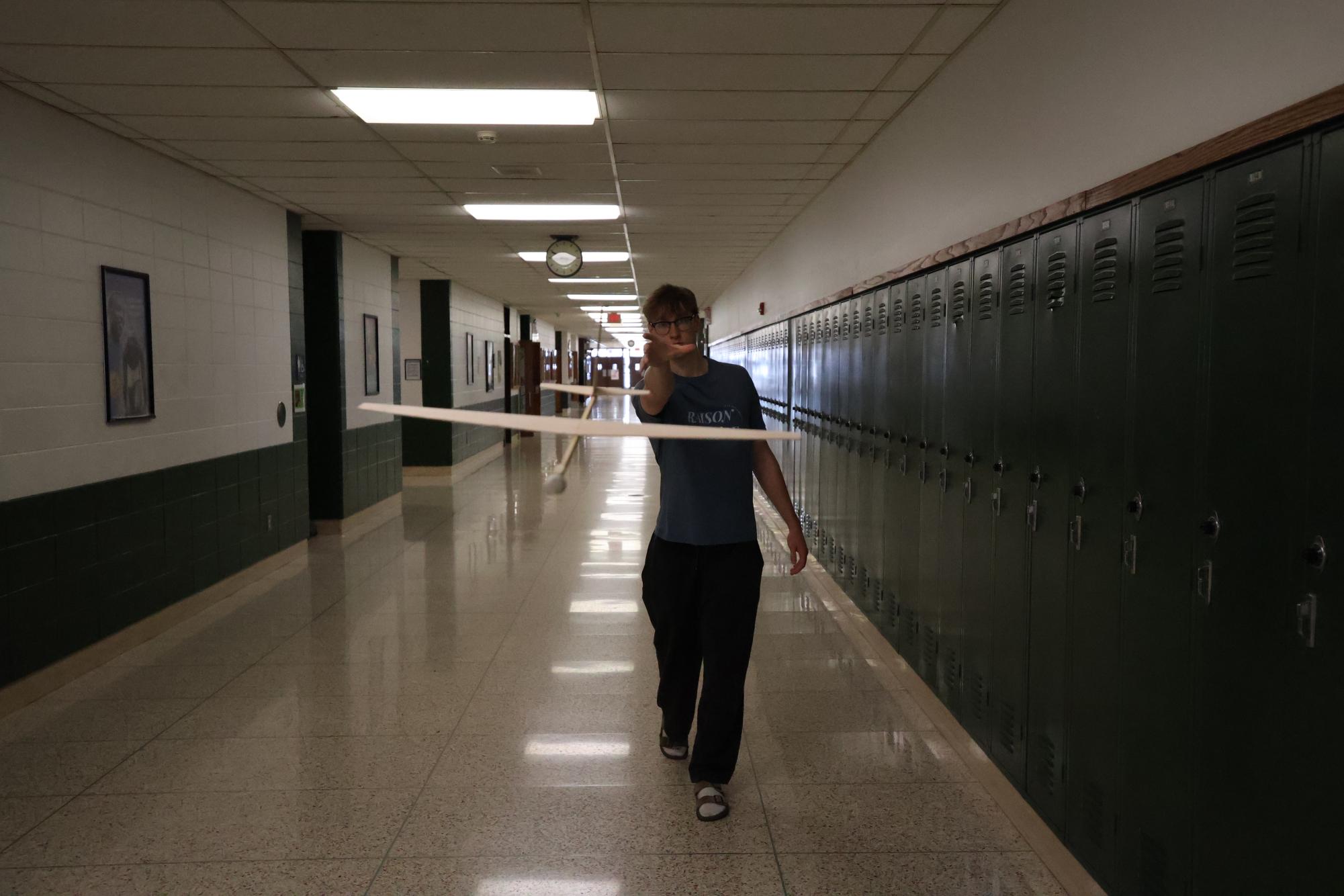
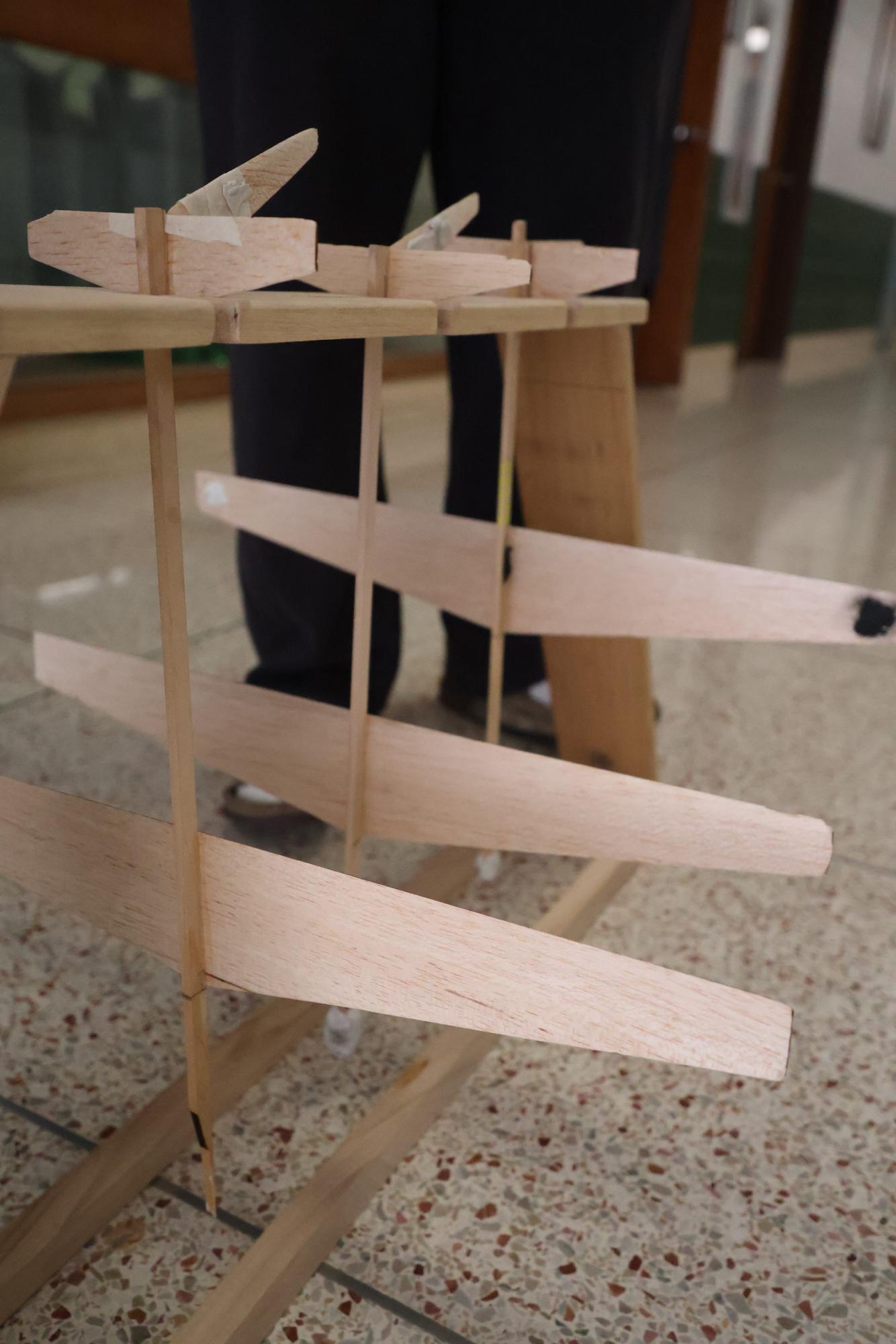
It takes countless hours of designing, editing, and changing in order to get a plane to fly. Although a very difficult challenge, students in aerospace engineering were all able to build and fly a plane while competing to see whose plane can fly the furthest.
Wauwatosa West’s Aerospace Engineering class is not a well known class, but is very popular among the students enrolled. Around 20 students from sophomores to seniors learn fundamental aerospace skills about plane design, air foils, rovers, and coding over the course of two semesters.
Many students who see a future in aerospace engineering or any engineering thrive and learn many important skills from the hands on class experience. “I plan on studying mechanical engineering in collage and many skills that I have learned in this class will greatly benefit me in collage.” said Senior Evan Timmers.
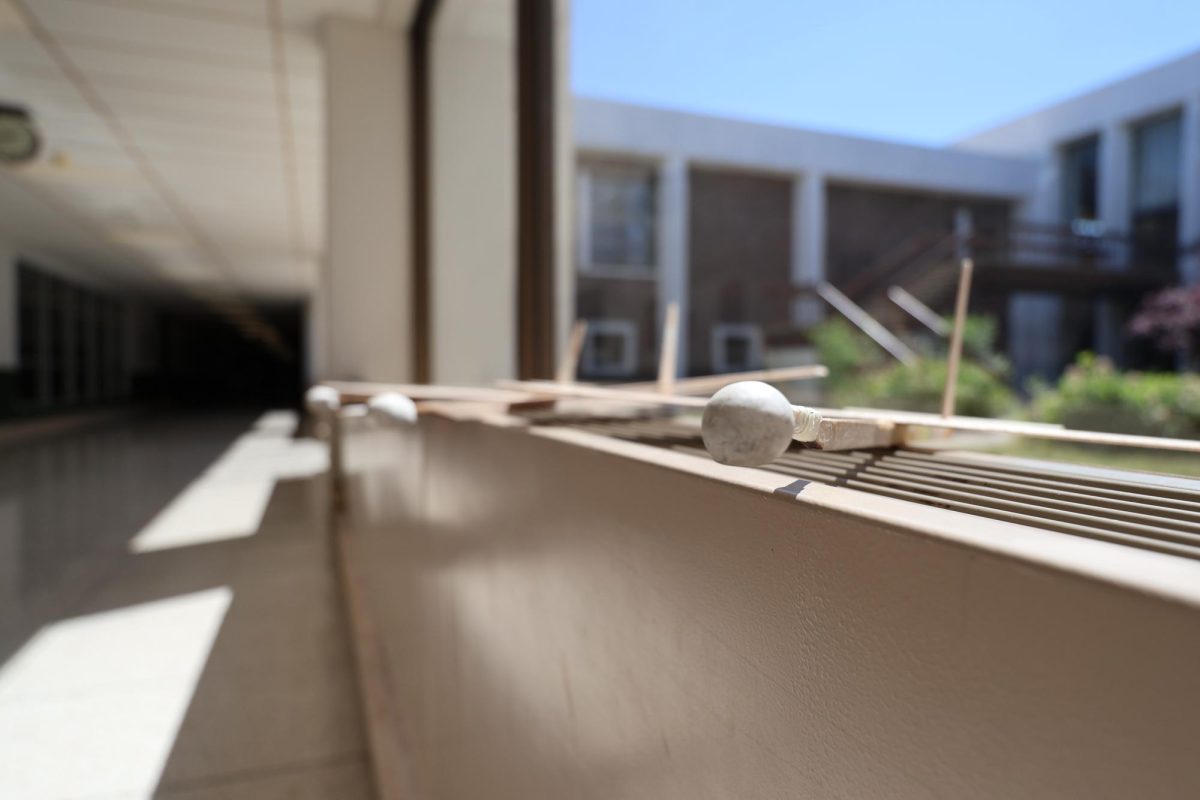
Throughout the first semester of this two semester class students had a strong focus on aircrafts. After learning the parts of a plane and testing designs with paper. Students would then use a digital soft wear “aery” to create a balsa wood plane design which they would laser cut and assemble, highlighting the advanced skill set these student have. After assembling their aircraft students would test and change the weight distribution allowing their craft to fly the furthest.
Senior Brady Johnson tests his balsa wood airplane testing the weight distribution in the designated testing area 5/28
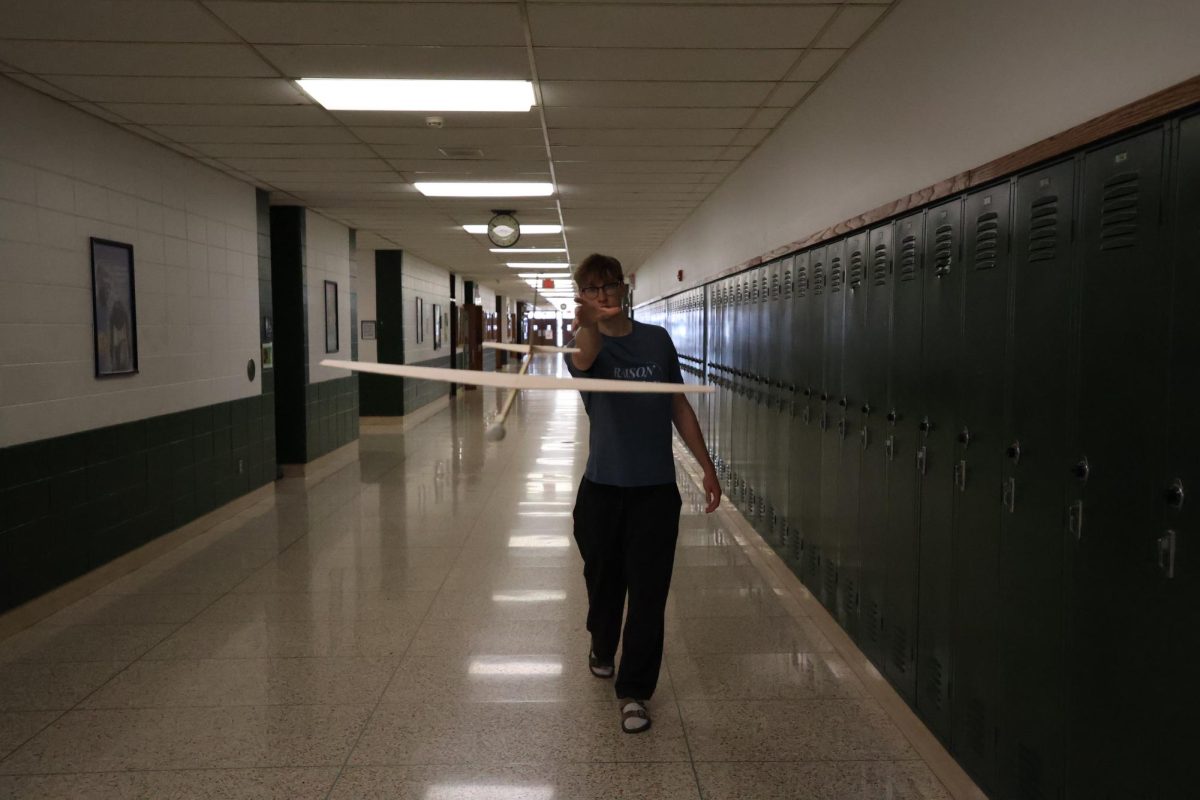
Students competing their aircraft would be launched with a rubber band from a makeshift runway. Some of the best planes would fly 60 feet some even reaching the 70 feet mark. “It is a very difficult challenge but a very rewarding one too.” Senior Brady Johnson stated.
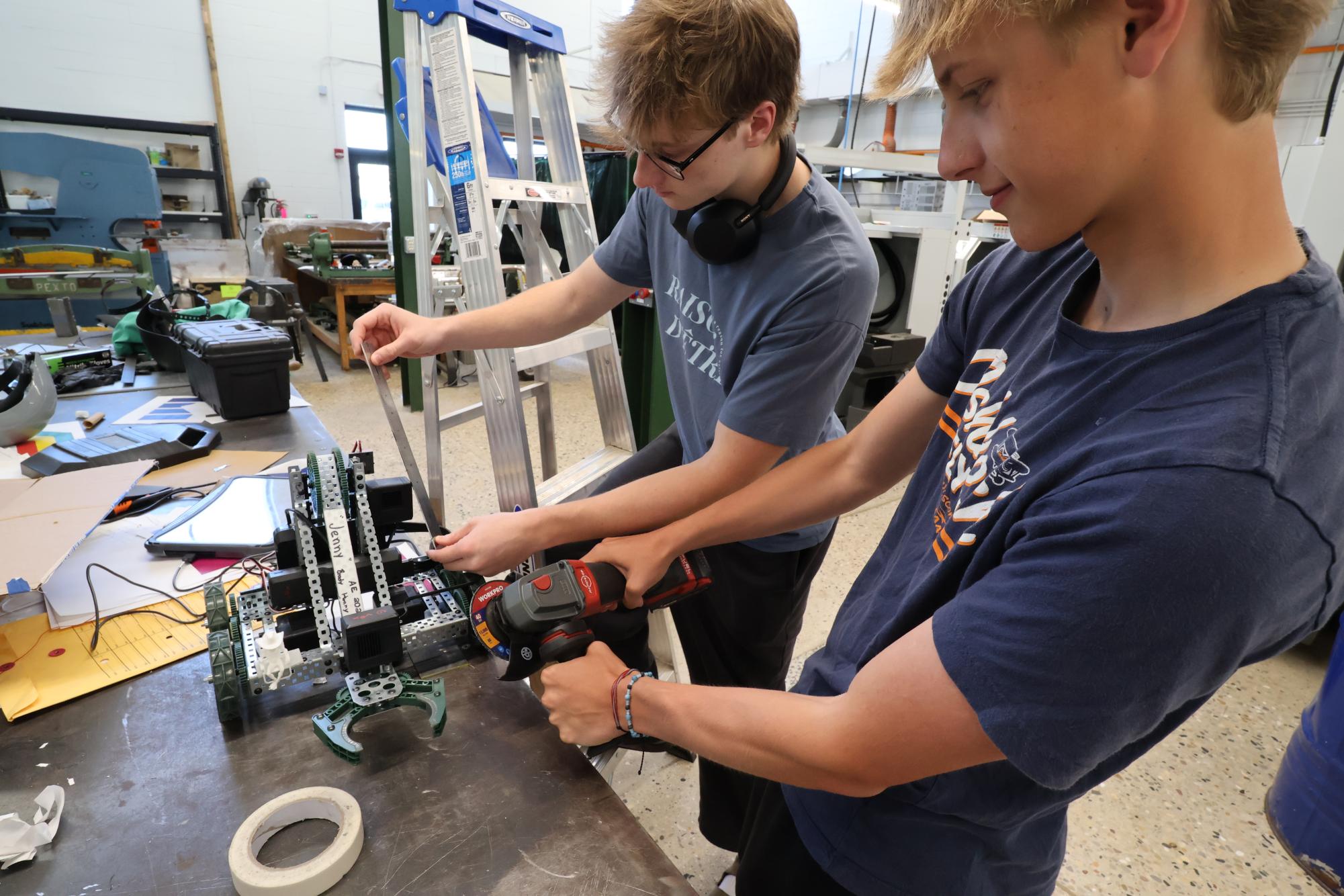 Seniors Brady Johnson and Evan Timmers edit their robot “Jenny” next to the track, attempting to save time while driving around the track on the engineering shop floor 5/28
Throughout second semester the class has had a large focus on autonomous rovers. Starting with remotely controlled rovers forced to dodge obstacles and tasked with collecting blocks. Many students found a difficult challenge in this but were able to grow develop, learning many new skills that are difficult to teach at a desk. Students are able to learn the capabilities of the rovers and how useful they can be. Student Brady Johnson said, “Many skills that stick with you for your life are skills that you learn from hands on experiences”
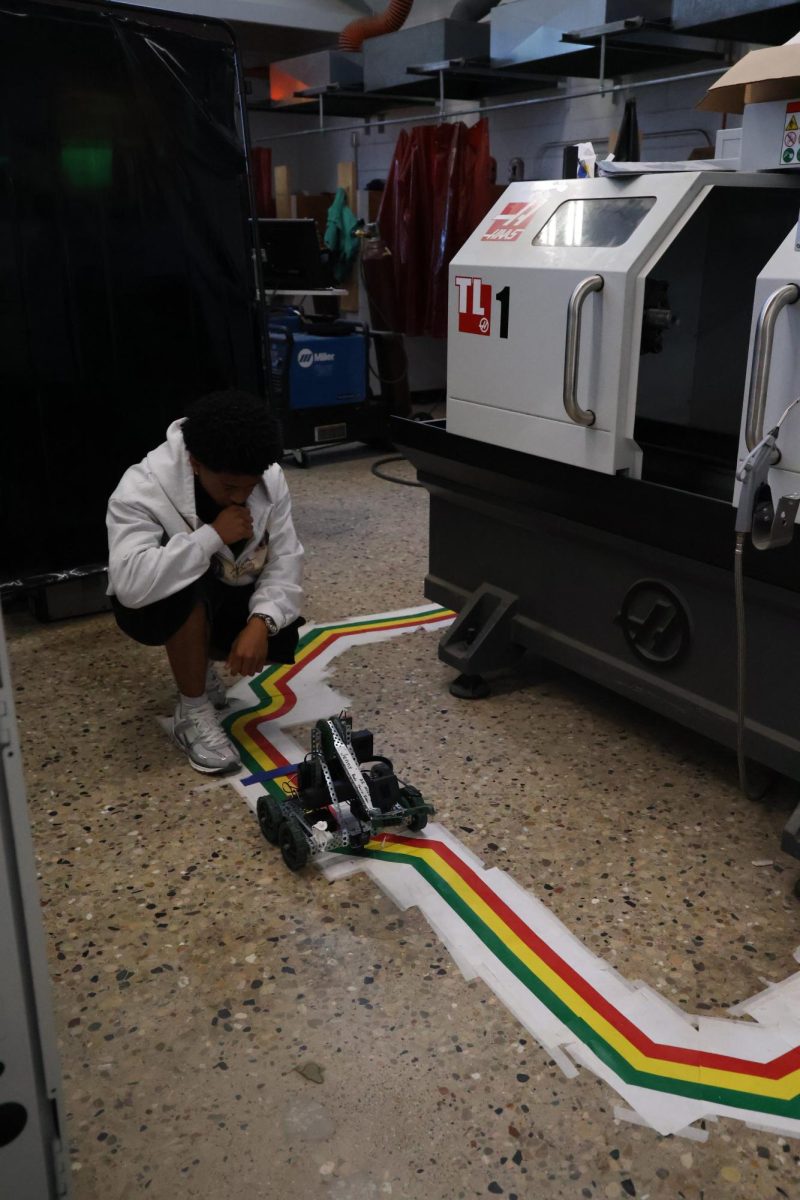 Junior Christian Collins watches his robot as it drives around the track hoping for a successful lap 5/28
After completing the remote control challenge students were faced with a coding challenge requiring the robots to follow a long path while dodging obstacles on the track. Students coding skills were testing and reinforced through this difficult challenge with many students starting the foundations for strong coding skills while others reinforced skill they already had. “I thought I had very strong coding skills but after working with rovers I have improved tremendously” Senior Evan Timmers Stated.
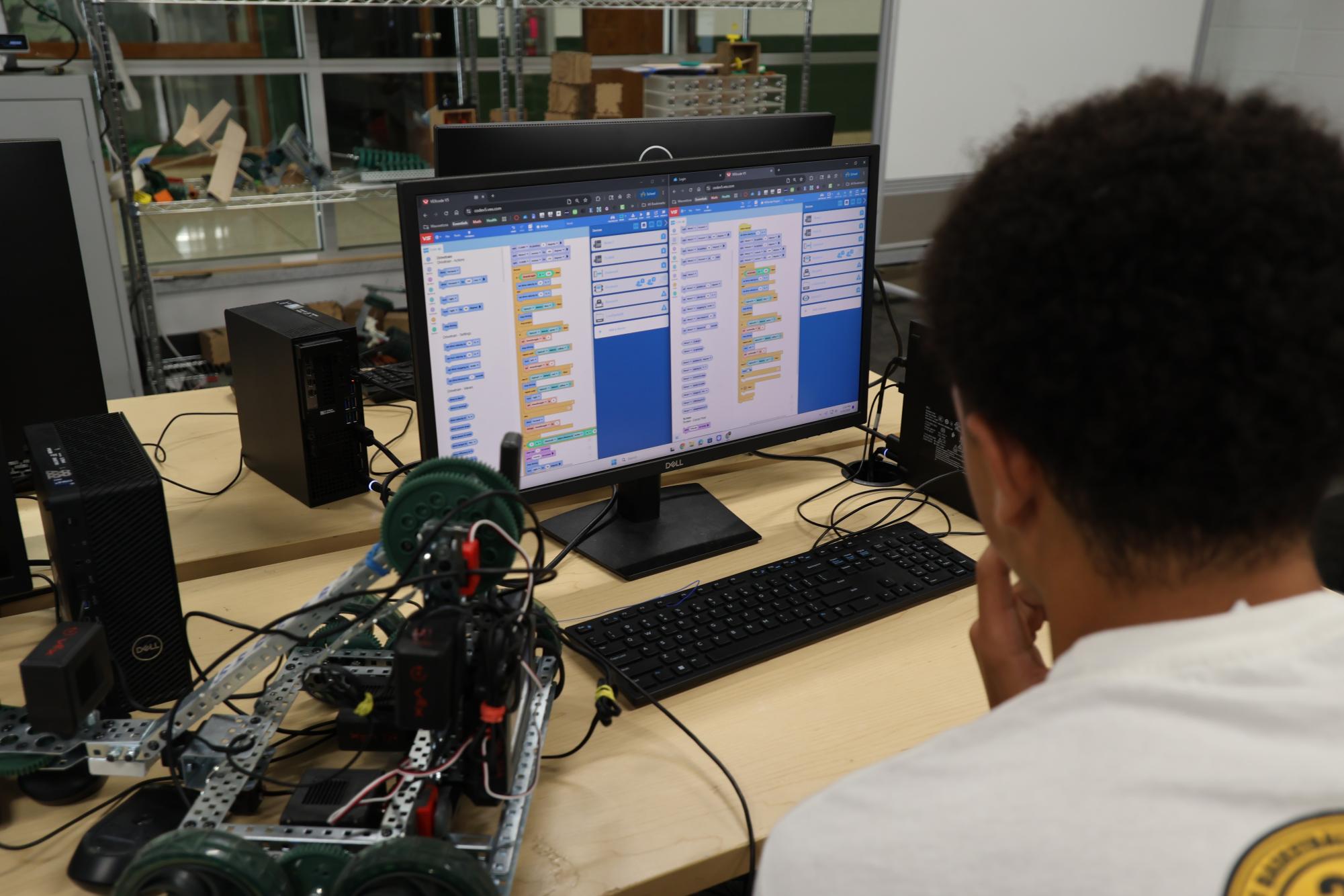 Sophomore David Cato edits code in the computer lab attempting to complete a lap on the track 5/28
Coding and software was not the only challenge students faced. Many robots required hard ware alterations and changes in order to perform the best. These physical changes highlight the many skills these students have learned. From rebuilding the claw length to changing motors this challenged students to think critically and build foundational skills that can be used for the rest of their life.
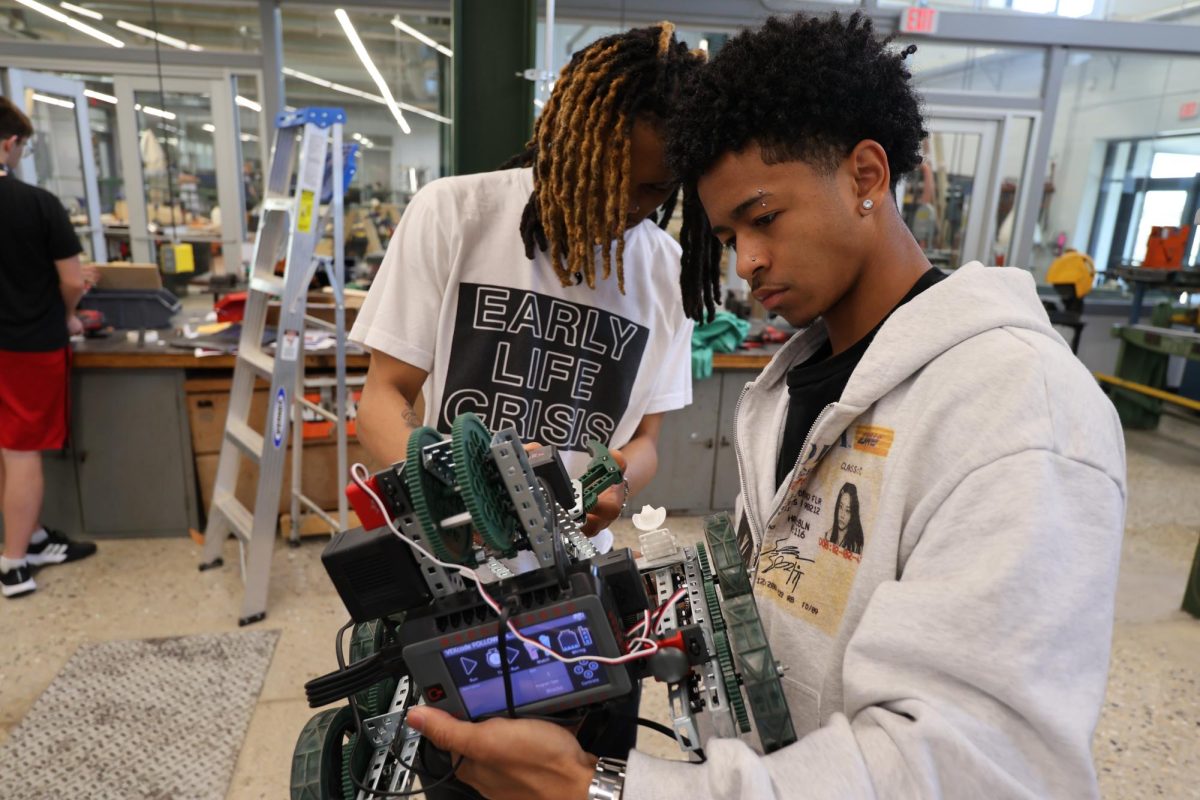 Junior Christian Collins and Senior Landon Bufford look for a fault in their robot that causes it to fail the line following test on the track 5/28
Students in aerospace engineering demonstrate high abilities in writing code, editing code, problem solving, troubleshooting and many more skills that are very hard to teach while sitting at a desk.
Learning skills hands on is something that is super important and often overlooked while in school. Many students miss out on many learning and growing opportunities by simply not having the option of a shop class such as aerospace engineering. Not all students learn by reading a book or listening to a teacher. Often, kids need a physical demonstration and a way to test, change, and improve while physically doing work. Aerospace Engineering is a vital class to the development of skills that aid in future endeavors in any form of engineering.
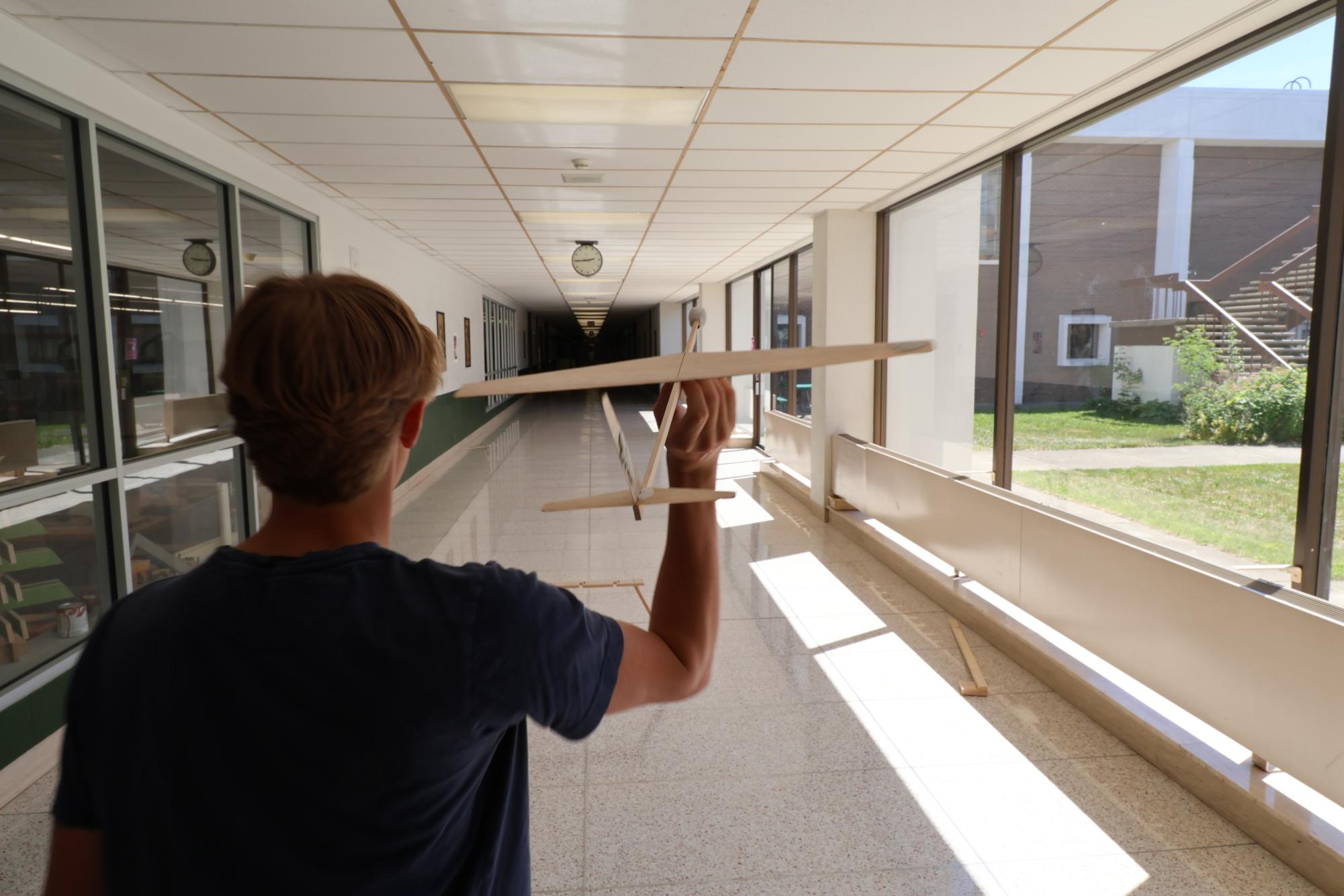 Senior Evan Timmers uses his test flights to check his balsa wood airplane throwing it down the hallway 5/28