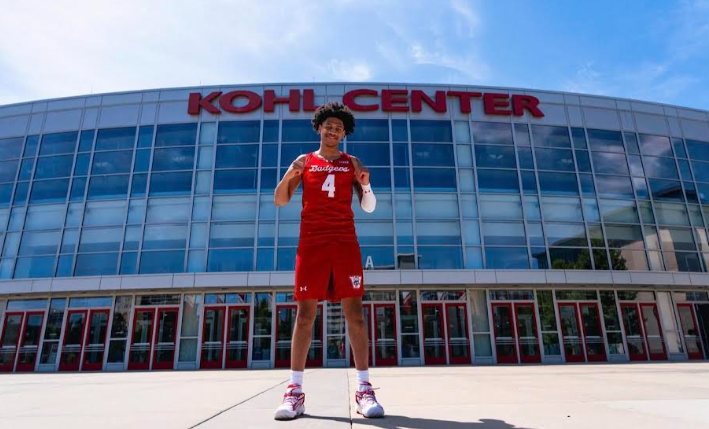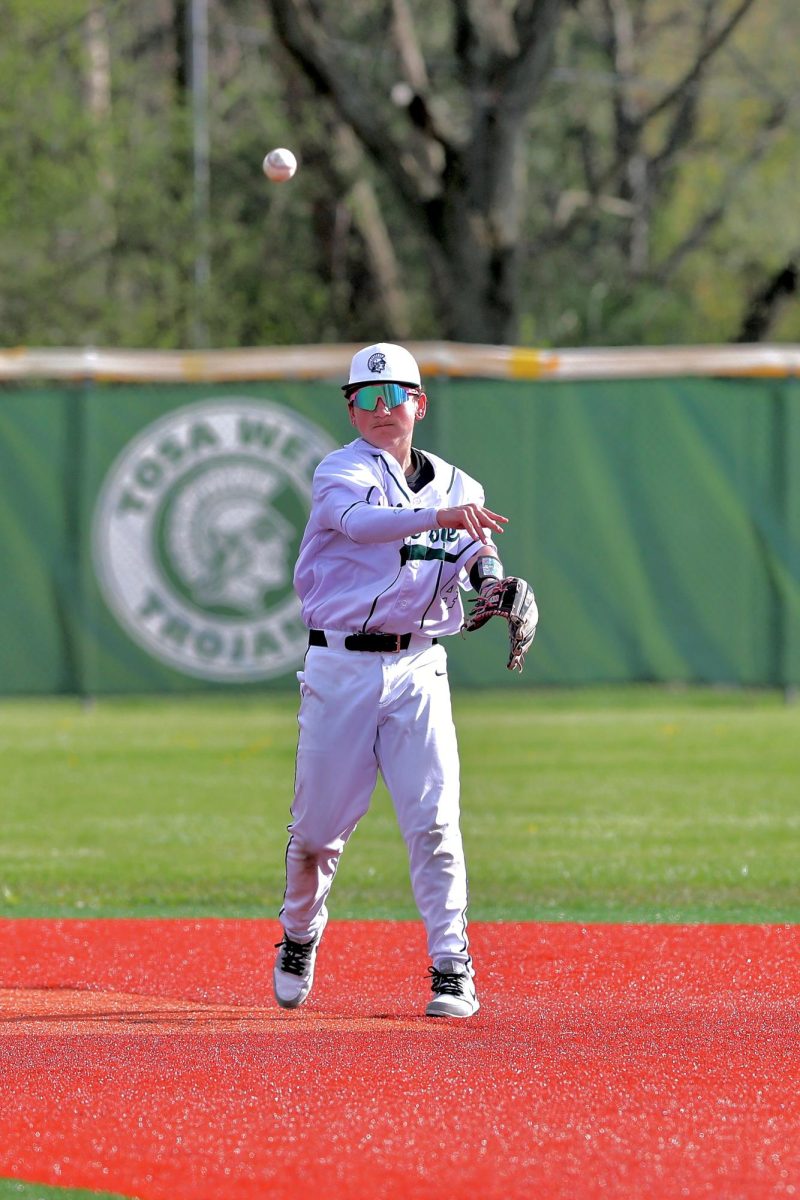


Walking to the locker rooms as a current Wauwatosa West athlete, you pass the legacy of those who came before—walls lined with photos of alumni who once wore the same uniform. One of those faces belongs to Alou Dillon, a 2017 multi-sport graduate whose journey from high school athlete to professional basketball player continues to inspire students today.

“It played a huge role in my high school experience,” Dillon said. “Basketball was something I had a passion for, and it helped me become a great student.”
Dillon credits his time at Tosa West not only for shaping him as an athlete, but also for building confidence and discipline in the classroom. He said the encouragement he received from coaches and mentors helped him recognize his potential—often before he saw it himself.
“They always saw what I didn’t see,” Dillon said of his coaches, including Mike Landisch and Coach Stealse. “They were always pushing me past my limits.”
That consistent support helped Dillon develop confidence on and off the court.
“They instilled the confidence in me to be myself and play freely,” Dillon said. “They allowed me to become the player and person I am today.”
Dillon’s basketball career continued after high school when he signed a letter of intent to play at South Dakota State University.
“After graduating high school, I had multiple opportunities to play basketball in college,” Dillon said. “I accepted a scholarship from South Dakota State and played there for three years. I redshirted my first year and played two seasons.”
His college career, however, came with challenges. Dillon later transferred to Winona State University, where injuries and personal struggles kept him off the court.
“I never played due to injuries and off-the-court personal issues,” he said.
Despite setbacks, Dillon remained focused on his long-term goals.
“I knew I wanted to play professionally or go to Europe,” he said. “I knew I had to stay healthy, average over 15 points, earn some type of all-conference recognition, and shoot over 41 percent.” 
After college, Dillon took the next step by committing to play professionally overseas in Slovakia. The experience, he said, tested him in ways basketball alone never had.
“Being all alone in a country by yourself, across the water—you deal with uncertainty and stress,” Dillon said. “I learned a lot about myself and how to stay calm in tough situations.”
Living independently forced him to mature quickly.
“It taught me how to grow up and figure things out on my own,” he said. “I had to stay on top of everything every day to continue playing professionally.”
The pressure of professional basketball was a major adjustment.
“In high school, you’re not getting paid to perform,” Dillon said. “Overseas, your job is on the line every single day. Someone else can replace you. Every practice and every game mattered because we were on contract.”
Much of Dillon’s perspective traces back to the support he received early in his life. He credits former head varsity coach Mike Landisch, who was also his teacher in fifth grade, for introducing him to the program.
“He allowed me to be a ball boy at such a young age,” Dillon said.
Landisch, who died from kidney cancer at the age of 31, left a lasting impact on Dillon’s life. Dillon remembers him as a dedicated coach, teacher, and family man who gave everything he had—on the court and beyond.
Inspired by the mentorship he received, Dillon returned to Tosa West with a desire to give back. 
“Being in these kids’ shoes, I understand they have no idea what’s coming after Tosa West,” Dillon said. “I wanted to be that mentor—that bridge—to help guide them through that transition.”
Returning to the gym where his journey began brings a deep sense of belonging.
“It feels like I never left,” Dillon said. “The floor is the same. The walls are the same. This was my home since I was 10 years old.”
Today, Dillon works as a trainer and mentor, focusing on skill development, mindset training, and life coaching. He emphasizes patience and consistency in everything he teaches.
“I try to teach who can stay consistent the longest,” Dillon said. “It’s not about short-term progress—it’s about the long game.”
He also connects basketball lessons to real life.
“They go hand in hand,” Dillon said. “Delayed gratification means we might not make shots today, but if we keep our form consistent over time, the results will come.”
Dillon’s definition of success has evolved over the years. 
“As a student, success was external validation,” he said. “Points, offers, recognition. Now, success is fulfilling my purpose and being true to myself.”
As students walk past the alumni photos lining the halls of Tosa West, each image represents a journey filled with challenges, growth, and purpose.
And as Dillon put it, “Every picture has a story—this one just happens to be mine.”